
Parkinson’s Home Care in Montreal
Keeping their rhythm, at home.
With Parkinson’s, no two days are quite alike, and needs change over time. In Montreal, our caregivers and nurses support your loved one at home, in a seniors’ residence or at the hospital, from a few hours a week up to 24 hours a day.

Understanding the disease
Parkinson’s disease: what is it?
A disease that progresses slowly, and differently for each person. It affects movement, but not only movement.
Sources: Parkinson Québec, Définition and Symptômes (in French); Parkinson Canada, What is Parkinson’s. Accessed October 2026.
-
A brain disease
Neurons that produce dopamine are gradually lost. As a result, the brain has less control over movement.
-
Movement symptoms
The best known:
- slowness
- tremor at rest
- stiffness
- loss of balance
-
Less visible symptoms
Beyond movement, Parkinson’s can also cause fatigue, sleep problems, constipation, pain, anxiety, depression, changes in thinking or memory, and bladder problems.
When to consider it
When home care starts to help.
With Parkinson’s, daily life changes step by step. These are often the situations that lead families to call us:
When nursing care is needed, a qualified nurse can provide clinical support tailored to your loved one’s needs. And if they need someone there at all times, consider 24-hour care.
Falls, or the fear of falling
For some people, walking becomes less steady, especially when turning around or on stairs.
Moments when everything gets harder
When the medication wears off, movements slow down or freeze.
Medication at set times
Sometimes several doses a day, at the times prescribed by the doctor, which vary from person to person.
Meals need more attention
Cutting food and lifting the fork get harder, and for some people, swallowing too.
Washing and dressing take time
Buttons, shoes, showering: small movements get harder.
Restless nights
Frequent waking and getting up at night, for your loved one and for you.
or call 514-935-2600, day and night
What you’re going through
You don’t have to navigate this alone.
Caring for someone with Parkinson’s can bring uncertainty, sadness, worry and exhaustion. Every family lives it differently, and support is available for you, too. By your side, our care goes beyond the physical: we take care of your loved one, and we are here for you.
Parkinson Québec also supports people living with Parkinson’s and their families. You can reach them at 1 800 720-1307.
The uncertainty of a disease that changes from one day to the next, sometimes from one hour to the next.
The fear that your loved one will fall when you’re not there.
The sadness of seeing your loved one withdraw or lose their spark.
The guilt of wanting a break when your loved one needs you.
The exhaustion when days and nights blur together.
How we help
-
Care adapts to every change
When needs change, care follows: more hours, a nurse when health calls for it, without changing agencies.
-
You stay family
We take over the care, so you can get back to simply being with your loved one.
-
You can take a break
Respite for a few hours or a few days, and someone awake at night if night-time trips worry you.
Further reading Caregiver burnoutFall prevention at homeL’Appui Info-aidant line: 1 855 852-7784
What the research says
Living with Parkinson’s at home: what the sources say.
Here is what Parkinson Québec and Parkinson Canada say, and how we respond.
On time
Over time, each dose of medication works for a shorter period. Symptoms come back as it wears off.1
What we do
Reminders for each dose, bathing and outings at the right times, and a log of the timing for the neurologist.
Moving
Adapted physical activity helps manage symptoms, improves balance and reduces the risk of falling.2
What we do
Accompanied walks and outings, and physiotherapy at home with our partners.
Up to 50%
of people with Parkinson’s are affected by depression at some point, often without it being recognized.3
What we do
Daily presence and companionship, and any change in mood is reported to the family and our office.
1. Parkinson Québec, Fluctuations de l’efficacité des médicaments dans le temps (in French). 2. Parkinson Québec, Activité physique (in French). 3. Parkinson Canada, Precursors to Parkinson’s disease. Last updated: October 2026.
Day to day
Four situations to know about, and what helps.
Practical tips from Parkinson Québec and Parkinson Canada, for you and your loved one.
Preventing falls
As the disease progresses, balance problems may become more prominent, though not everyone is affected the same way.
Learn more
Remove rugs and objects from the floor, light the home well, install grab bars and a non-slip mat in the shower. Also avoid chatting while walking: doing two things at once increases the risk. The CLSC can point you to the nearest PIED exercise program. Source: Parkinson Québec (in French). See also our fall prevention guide.
Feet “glued to the floor”
This is known as freezing: walking suddenly stops, especially when starting, turning around or at a doorway.
Learn more
It affects about one person with Parkinson’s in three. To get going again: stop, then aim for a line on the floor or walk to the rhythm of music or hand claps. Source: Parkinson Québec (in French).
Safer meals
Swallowing can become harder for some people with Parkinson’s, especially over time. It should be assessed by a healthcare professional.
Learn more
Take your time, turn off the TV, sit up straight with the chin slightly tucked, take small bites and don’t talk with a full mouth. Mention it early to the neurologist: a speech-language pathologist can assess swallowing. Source: Parkinson Québec (in French).
If your loved one is hospitalized
In hospital, medication rounds don’t always match your loved one’s schedule. Even a small delay can worsen symptoms.
Learn more
Bring the list of medications with the exact dose times, and ask the team to keep to them. Source: Parkinson Canada.
Peace of Mind
Solid support, so you can be there for your loved one.
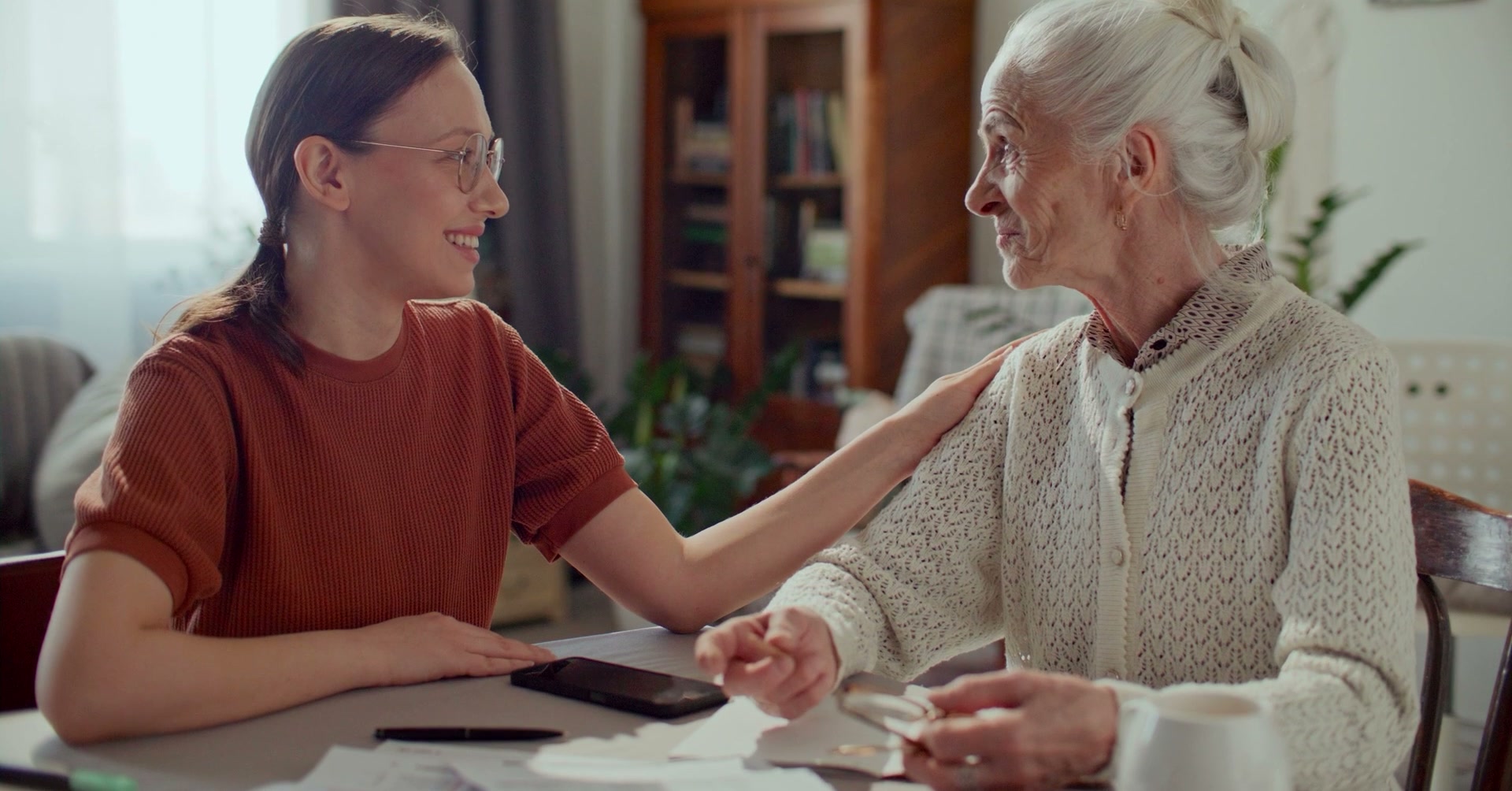
Entrusting a loved one living with Parkinson’s takes complete trust. Here is what we put in place to earn it.
Experience with Parkinson’s since 1998: we have supported many families, which keeps us a step ahead of the changes that may come.
A care plan prepared or reviewed by a nurse: followed at every visit and revised whenever your loved one’s health changes.
Your Care Manager: a dedicated person who connects the family, the caregivers and the medical team.
Your loved one is entrusted to kind, caring caregivers: chosen for that quality.
No shift left uncovered: if something unexpected comes up, our team makes sure someone is always there for your loved one.
An extra safety net: LifeCare Plus can detect suspected falls, day and night.
Since 1998 · 300+ caregivers · #6 in the Les Affaires ranking of Quebec’s top 300 SMEs
24 hours a day, 7 days a week
A question? Someone answers, day and night.
A question or something unexpected, in the evening, on a weekend or a holiday: our on-call team answers, 24 hours a day.
Getting Started
How care begins.
-
Step 1
A first call
Tell us about your loved one, what has changed and what worries you. We take the time to listen.
-
Step 2
A care plan built around your loved one
Your Care Manager assesses your loved one’s needs, and a nurse prepares or reviews the care plan.
-
Step 3
Care begins
The caregiver matched to your loved one starts their first shift. The plan is revised when their condition changes.
Learn more about our care management process.
Related Services
Care that follows the course of the disease.
Depending on the stage and your needs, these services add to your loved one’s care.
Where we provide care
Parkinson’s home care in Westmount, Montreal, the West Island, the South Shore and Laval.
Questions Families Ask
Parkinson’s care, answered.
If your question isn’t here, a Care Manager will answer it on the phone.
See all FAQs →Is it possible to stay at home with Parkinson’s?
Yes, with the right support. Our care adjusts as the disease progresses: a few hours a week at first, more presence as needs grow, and up to 24 hours a day.
Who gives the medication?
Our caregivers remind your loved one to take their medication on time, see them take it and hand them the pill organizer. Giving medication is done by registered nurses and licensed practical nurses, and by some caregivers authorized to do so under a nurse’s supervision.
When is a nurse needed rather than a caregiver?
It isn’t the diagnosis or the stage that decides, but your loved one’s actual needs. A nurse becomes necessary when their condition needs clinical follow-up, for example for medication, swallowing or other complex needs. For hygiene, transfers, meals, walks and companionship, a caregiver is there.
Can you help my loved one stay active?
Yes. Our caregivers accompany walks and outings, and your Care Manager can connect you with a partner physiotherapist. Parkinson Québec also offers adapted physical activities (in French).
Does the caregiver stay awake at night?
Yes. They stay awake for the whole shift. When nursing care is needed, a qualified nurse can provide clinical support tailored to your loved one’s needs.
Does this work alongside the neurologist and the CLSC?
Yes. Our private care adds to medical follow-up and CLSC services, without replacing them.
Where can we find support after the diagnosis?
Parkinson Québec supports people living with Parkinson’s and their families. You can reach them at 1 800 720-1307. L’Appui’s Info-aidant line also helps caregivers at 1 855 852-7784.
How soon can care start?
It depends on your loved one’s needs and on the availability of our nurses and caregivers. Your Care Manager will tell you when care can start once they know the situation.
How much does Parkinson’s home care cost?
It depends on the number of hours and the type of care, whether a caregiver (PAB) or a nurse. There is no long-term contract. Quebec residents aged 70 or older may qualify for Revenu Québec’s tax credit for home-support services for seniors. Your Care Manager will give you a precise estimate after your first call.
Every person lives with Parkinson’s at their own pace. A Care Manager will listen and help you build care that evolves with your loved one.
Take the first step together